Thursday, November 18, 2010

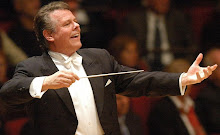
Tribute to Frederick Fennell: Bravo, Maestro! Encore!

Composer(s): Miscellaneous
Conductor: Frederick FENNELL
Orchestra/Ensemble: Tokyo Kosei Wind Orchestra
Label: Kosei Publishing Company
Catalog #: KOCD-3580
Format: CD
Time: 72:25 min
SPARS Code: DDD


This recording contains the encores Frederick Fennell performed, with his beloved Tokyo Kosei Wind Orchestra. This CD was released posthumously, after the passing on of Frederick Fennell, who had been Principal Conductor of the world-class orchestra since January 1984, a position he served (later as Conductor Laureate in 1996) with distinction until his death in December 7, 2004. He was ninety years old.

Notes on recording:
At the beginning of tracks 2,7,8,13,14,15 and 16 conductor Fennell can be heard speaking in what he playfully described as "Maestro's Japanese" to tell the Japanese audience the title or give them a quick description of the encore they were about to hear.

Some minor background noise may be audible on this disc because the original masters were live and analogue recordings.

Friday, November 5, 2010

The Musical Legacy of Claude T. Smith - Danse Folâtre [Bankhead, Tokyo Kosei Wind Orchestra]

Composer(s): Claude T. SMITH
Conductor: James M. BANKHEAD
Orchestra/Ensemble: Tokyo Kosei Wind Orchestra
Label: Kosei Publishing Company
Catalog #: KOCD-0302
Format: CD
Time: 53:34 min
SPARS Code: DDD


About the Composer
===============
Claude T. Smith was born in Monroe City, Missouri. He received his undergraduate training at Central Methodist College in Fayette, Missouri and at the University of Kansas. He composed extensively in the areas of instrumental and choral music and his compositions have been performed by leading musical organizations throughout the world. Having over 110 band works, 12 orchestra works and 15 choral works, he composed solos for such artists as "Doc" Severinsen, Dale Underwood, Brian Bowman, Warren Covington, Gary Foster, Rich Matteson and Steve Seward. Mr. Smith taught instrumental music in the public schools of Nebraska and Missouri.

He also served as a member of the faculty of Southwest Missouri State University in Springfield, Missouri, where he taught composition and theory and conducted the University Symphony Orchestra. Sacred music was also a deep love of Mr. Smith's as he directed a church choir for 5 years in Cozad, Nebraska, 10 years in Chillicothe, Missouri and nine years in Kansas City, MO.
Claude Smith

Smith's first band composition was entitled "World Freedom". His first published work, "Emperata" was published in 1964 by Wingert-Jones Music Inc., Kansas City, MO. This led to many other works being published by Wingert-Jones. In 1978, he also became a staff composer for Jenson Publications (currently Hal Leonard) and the educational consultant for Wingert-Jones. Claude T. Smith Publications, Inc. was founded in 1993 to publish works of Smith's which had not yet been released and works that had gone out of print.

Smith received numerous prestigious commissions including works for the U. S. Air Force Band, the "President's Own" U. S. Marine Band, the U. S. Navy Band, and the Army Field Band. His composition "Flight" was adapted as the "Official March" of the National Air and Space Museum of the Smithsonian Institute. His orchestra works include compositions for the Kansas City Youth Symphony, the South Bend Young Symphony, the Springfield MO Symphony and the 1981 Missouri All-State String Orchestra.

Claude T. Smith was active as a clinician and guest conductor throughout the United States, Australia, Canada and Europe. He received many awards for his contributions to music education and for his work in composition. He had been a constant recipient of the A. S. C. A. P. Composer's Award. Following his death, he was awarded the National Band Association Award (A. W. A. P. A.) Academy of Wind and Percussion Arts in 1988; an honorary Doctorate of Humane Letters from Central Methodist College in 1988, the Hall of Fame Award from the Missouri Bandmaster's Association in 1988, the Kappa Kappa Psi Distinguished Service to Music Award in 1989, the Hall of Fame Award from the Missouri Music Educators Association in 1992 and was awarded as School Director of the Year from the Christian Instrumentalists Directors Association in 1994.
Claude Smith

Mr. Smith was a member of the Music Educators National Conference, member and past-president of the Missouri Music Educators Association, National Bandmasters Association and the American Bandmaster's Association.

Mr. Smith passed away on December 13, 1987 in Kansas City, Mo. He had just completed conducting a Christmas Concert at his church. He was survived by his wife, Maureen Faye Smith and his daughter, Pam Smith Kelly. Maureen, Pam and her husband, Jim, founded Claude T. Smith Publications, Inc. in 1993 with the purpose of keeping the music and legacy of Claude T. Smith alive in the hearts of musicians world-wide.

Tuesday, October 26, 2010

Barnes: Fantasy Variations On a Theme By Paganini, etc, James Barnes, Tokyo Kosei Wind Orchestra

Composer(s): James BARNES
Conductor: James BARNES
Orchestra/Ensemble: Tokyo Kosei Wind Orchestra
Label: Kosei Publishing Company
Catalog #: KOCD-0301
Format: CD
Time: 57:25 min
SPARS Code: DDD


(Text From Wikipedia)
About the Composer:
James Charles Barnes
(born September 9, 1949 (1949-09-09) (age 61) in Hobart, Oklahoma, U.S.) is an American composer.

Barnes studied composition and music theory at the University of Kansas, earning a Bachelor of Music in 1974, and Master of Music in 1975. He studied conducting privately with Zuohuang Chen. Since 1977 he has been a professor of theory and composition at the University of Kansas, where he teaches orchestration and composition.

Barnes is also a tubist and has performed with numerous professional organizations in the United States.

His numerous compositions are frequently played in America, Europe, Japan, Taiwan and Australia. The Japanese concert band Tokyo Kosei Wind Orchestra has produced 3 CDs to date with works of James Barnes.

He has twice received the American Bandmasters Association Ostwald Award for contemporary wind band music.

For my information click here http://en.wikipedia.org/wiki/James_Barnes_%28composer%29


Fantasy Variations On a Theme by Niccolo Paganini
======================================

As I could find no review on the web, I've made a personal account of the piece, pardon my amateurish lingo:

Fantasy Variations (on a theme by Niccolo Paganini), the theme being Caprice No. 24 in A minor from the 24 Caprices for Solo Violin. The piece is composed by James Barnes in 1989 for concert band.
The difficulty level is grade 5+ to grade 6 (American band difficulty standard).
This is considered to be an advanced level, usually performed by university levels and above.

It opens with the theme, highlighted by an oboe solo. After that, 20 variations on this theme are played through, thus the name.
Variation I: Basically the theme played, developed to include the entire ensemble, with melody played by the flutes and clarinets.
Variation II: A slower melody, played by the oboes and clarinets.
Variation III: The "Trombone Special." The first comic relief section. The 2nd and 3rd trombones (that's me) play two notes, followed by the 1st trombones playing a high, whiny, glissando, all muted. Four measures in, the contra-alto clarinet plays a very low melody. My personal favorite.
Variation IV: The flutes play a very fast dance-like melody.
Variation V: The next four variations are slow melodies played by various instruments. This one is oboes.
Variation VI: Bassoon.
Variation VII: Clarinets.
Variation VIII: Saxophones.
Variation IX: Speeds up again, melody carried by bass clarinet.
Variation X: Similar to IX, played by clarinets.
Variation XI: Very fast, Russian sounding melody played by trumpets.
Variation XII: Slower, foreboding melody played by trombones.
Variation XIII: Another good one, trombones and saxophones play a duet that sounds like boss music.
Variation XIV: A continuation of XIII. Hardly warrants its own section.
Variation XV: Comic relief #2. Tuba and baritone quartet. Have you ever heard tubas playing (trying to) sixteenth notes?
Variation XVI: This is my least favorite. Bland, boring, little distinct melody.
Variation XVII: Percussion solos. Very fast, very good sounding. Another favorite.
Variation XVIII: Similar to XVII, with flutes and oboes playing melody.
Variation XIX: Sets up the final variation, almost everyone plays the booming melody.
Variation XX: Same as Variation I, ending similar to the beginning.

The rest of the CD represents other various works by James Barnes that is often played by concert bands.

Saturday, October 16, 2010

Alfred Reed - Armenian Dances 1 and 2, Alfred Reed, Senzoku Gakuen Symphonic Wind Orchestra

Composer(s): Alfred REED
Conductor: Alfred REED
Orchestra/Ensemble: Senzoku Gakuen Symphonic Wind Orchestra
Label: Walking Frog Records
Catalog #: WFR140
Format: CD
Time: 70:25 min
SPARS Code: DDD


(Text From Wikipedia)
Alfred Reed (January 25, 1921 – September 17, 2005) was one of America's most prolific and frequently performed composers, with more than two hundred published works for concert band, wind ensemble, orchestra, chorus, and chamber ensemble to his name. He also traveled extensively as a guest conductor, performing in North America, Latin America, Europe and Asia.

He was born in New York and began his formal music training at the age of ten. During World War II he served in the 529th Army Air Force Band. Following his military service he attended the Juilliard School of Music, studying under Vittorio Giannini, after which he was staff composer and arranger first for NBC, then for ABC. In 1953 he became the conductor of the Baylor Symphony Orchestra at Baylor University, where he received his B.M. in 1955 and his M.M. in 1956. His master's thesis "Rhapsody for Viola and Orchestra" was awarded the Luria Prize in 1959. He was a member of the Beta Tau Chapter of Phi Mu Alpha Sinfonia, the national fraternity for men in music.

From 1955 to 1966 he was the executive editor of Hansen Publications, a music publisher. He was professor of music at the University of Miami (where he worked with composer and arranger Robert Longfield) from 1966 to 1993 and was chairman of the department of Music Media and Industry and director of the Music Industry Program at the time of his retirement. He established the very first college-level music business curriculum at the University of Miami in 1966, which led other colleges and universities to follow suit. At the time of his death, he had composition commissions that would have taken him to the age of 115. Many of Reed's wind band compositions have been released as CD recordings by the Tokyo Kosei Wind Orchestra.


(Text From Wikipedia)
Armenian Dances
===============
Armenian Dances is a musical piece for concert band, written by Alfred Reed (1921–2005). It is a four-movement suite, of which Armenian Dances (Part I) comprises the first movement and Armenian Dances (Part II) comprises the remaining three. Each part consists of a number of Armenian folk songs from the collection of Komitas Vardapet (1869–1935), an Armenian ethnomusicologist.

Part I
=====
Armenian Dances (Part I) was completed in the summer of 1972 and first performed by the University of Illinois Symphonic Band on January 10, 1973. The piece is dedicated to Dr. Harry Begian, the director of that ensemble. The work includes five distinct sections:

1. Tzirani Tzar (The Apricot Tree) (mm. 1–29), which opens the piece, begins with a short brass fanfare and runs in the woodwinds. This sentimental song consists of three related melodies.
2. Gakavi Yerk (The Partridge's Song) (mm. 30–68), an original composition by Vardapet, has a simple melody which is first stated in the woodwinds and then repeated by the brass. Its simple, delicate melody was intended for a children’s choir and is symbolic of that bird’s tiny steps.
3. Hoy, Nazan Eem (Hoy, My Nazan) (mm. 69–185) is a lively dance, mostly in 5/8 time, which naturally imposes an unusual pattern of additive meter. In this song, a young man sings the praises of his beloved, named Nazan.
4. Alagyaz (mm. 186–223), a folk song named for a mountain in Armenia, is a broad and majestic song; it serves as a contrast to the fast, upbeat songs that come both before and after.
5. Gna, Gna (Go, Go) (mm. 224–422) is a delightful and humorous laughing-song in 2/4 time; it builds in volume and speed until the exciting conclusion of the piece.

Part II
=====
Armenian Dances (Part II) was again dedicated to Dr. Harry Begian, and was premiered on April 4, 1976 in Urbana, Illinois by the University of Illinois Symphonic Band, Dr. Begian conducting. Part II consists of three movements, each based upon a single Armenian folk song.

1. Hov Arek. A lyrical song in which a young man implores the mountains to send a breeze to rid him of his woes. It is a deeply moving song in which the delicate melodic line encompasses a wide range of expression. Hov Arek means "come, breeze;" however, on the score Dr. Reed put the translation as "The Peasant's Plea."
2. Khoomar. A female Armenian name. It was originally arranged for soprano with mixed chorus by Gomidas Vartabed. In this energetic, light-hearted dance song, a joyous Armenian village scene is depicted in which two young people meet and marry. This song is characterized by its vital rhythmic patterns. Dr. Reed subtitled this movement as "Wedding Dance."
3. Lorva Horovel. The original music has a complex improvisational melody which was extensively researched by Vartabed. In its rich rhythmic and melodic structure, it reveals elements dating back to Pre-Christian times. The song is connected with the farmer and his physical and spiritual being during his work. It is the immediate result of his labor, with his pleas to the oxen and his exclamations while plowing. These expressions resound throughout the free flowing melody, rhythmic and intervallic structure of this beautiful song. It is a plow song from the district of Lori, and Dr. Reed subtitled it "Songs from Lori."

References
========
* Program Note by Alfred Reed, from the scores to Armenian Dances (Part I) and Part II
* Historical Note by Dr. Violet Vagramian, Florida International University, from the scores to Armenian Dances (Part I) and Part II

Friday, October 1, 2010

Gustav Mahler: Symphony No. 6 - Jascha Horenstein, BBC Symphony Orchestra, Bournemouth Symphony Orchestra, Philharmonia Orchestra

Composer(s): Gustav MAHLER
Conductor: Jascha HORENSTEIN
Orchestra/Ensemble: BBC Symphony Orchestra
, Bournemouth Symphony Orchestra, New Philharmonia Orchestra
Label: BBC Legends
Catalog #: BBCL 4191-2
Format: CD (2 Discs)
Time: 64:19, 74:00 min
SPARS Code: ADD


By Tony Duggan from www.musicweb-international.com:
The reputation of Jascha Horenstein has never been higher. In fact I believe his reputation has never been so high since his death in 1973. Why else would there be so many reissues of past commercial recordings and first time issues of radio archive recordings as there have been these past few years? Recording companies do not have money to burn so they would hardly issue so much material if they did not know there was a substantial number of collectors prepared to buy it.

Though by no means the only label reissuing Horenstein recordings, BBC Legends was always going to lead the way with his work since he was so highly regarded in Britain for so many years and was broadcast so often by the BBC. Interesting when you remember that Horenstein was not British, so giving the lie yet again to the oft-repeated urban myth that the British only like to back their own artists.

Horenstein was born in the Ukraine and grew up in Vienna and Germany and post-war he held American citizenship. Neither was he ever resident in Britain, as was wrongly alleged in a recent review. He was, for most of the last years of his life, actually resident in Switzerland. So why did the British like him so much? Obviously there was a simple and straightforward appreciation of a superb musician, but I have always suspected there was also an innate sympathy for a character who clearly didn’t seem to fit anywhere. Horenstein wore his peripatetic artistic existence with some unease. To quote what is an Irish expression, said of Horenstein by the former leader of the London Symphony Orchestra Hugh Maguire, you always had the feeling that Horenstein "had his feet in the wrong wellies". Well we British like people like that and are prepared to give them a chance when others might not. Not, of course, that this aspect would ever have saved Horenstein for longer than a couple of concerts had he been a second-rater. There is no more critical and discerning an audience in the world for classical music than the British and they would have sussed out a "wrong-’un" had Jascha Horenstein been one very quickly indeed. Horenstein was no second-rater. He was straight out of the top drawer, an inheritor of the great tradition. That is not to say that he got it right every time. He didn’t. No great artist ever does that. Be very suspicious of the Maestro Perfects of this world. They are often all style and no substance. Like all the greats, Horenstein had to dare to fail to succeed and he sometimes did simply fail. But the failures were more than outweighed by the successes which his growing recorded legacy testifies to. Not ever easy music-making, mark you. Horenstein was never an easy conductor to get to know. His was music making that was always challenging of the audience and the reaper of rewards only for those with more than half an ear to hear rather than just listen.

His appearances in Britain date from the mid 1950s and continued unbroken until the year of his death in 1973. He appeared all over the country, not just in London, and in the end was offered the job of succeeding Sir John Barbirolli at the Hallé Orchestra in 1970. A position he turned down because of failing health. But he was also highly regarded in France as the issue recently of recorded material from concerts in Paris spanning ten years has shown (Music and Arts CD-1146 covering 9 CDs). He also conducted regularly in the USA. In an interview in Gramophone magazine around 1970 Horenstein talked about his reputation in Britain being largely built on his conducting of Mahler and Bruckner. I think he regretted this as he conducted a very wide repertoire indeed. His last British engagement was actually Wagner’s Parsifal at Covent Garden. But it’s true he was known as a Mahler and Bruckner man for so many of my generation, each concert or broadcast by him in those two composers an event not to be missed.

When the post-war revival in the interest in Mahler’s music got underway only Holland could possibly claim prominence over Britain in being a more fertile ground for its appreciation and even that is proved a close-run thing by the public record. Conductors such as Horenstein, Goldschmidt, Barbirolli, Schwarz, Klemperer, Del Mar, Van Beinum, Steinberg (these last two fine Mahlerians followed each other as Principal Conductors of the London Philharmonic), Süsskind, Hurst, Boult and Groves (who in Liverpool in the mid-1960s gave the first complete one conductor/orchestra Mahler cycle since the 1920s) had led the way in laying down the foundations for the great Mahler renaissance in the 1960s. Their work and the work of critics such as Deryck Cooke, Donald Mitchell, Neville Cardus, William Mann and Michael Kennedy made Britain, all of Britain, a home for Mahler before many other countries could catch up in even their capital cities. People in Manchester, Liverpool, Bradford, Birmingham, as well as London, knew their Mahler and knew him well. Here’s an example. As early as 1960 the distinguished critic Ernest Bradbury was able to write: "In recent years, Leeds audiences have done well in the cause of Mahler and Bruckner and it is highly likely that the majority of listeners tonight are by now well acquainted with the general structure and particular Lokalton of a Mahler symphony." It is worth stressing that this is a city in the provinces of the north of England Bradbury was writing about, not London, and in 1960 at that. The reason for Bradbury’s confidence in the Mahlerian appreciation of a Yorkshire audience as early as 1960 was performances there by, among others, Jascha Horenstein. In fact so confident were the concert planners of Leeds in the Mahlerian senses of their audience as early as 1959 that Eduard Van Beinum and the Amsterdam Concertgebouw had been scheduled to give Mahler’s Seventh in the Town Hall that year, though Van Beinum’s death intervened three weeks before the concert took place. (They got Bruckner‘s Eighth under Jochum instead and finally heard the Mahler Seventh under Barbirolli in 1960. [the first live concert I attended - LM]) And there in the middle of the great Mahler movement in Britain from the late 1950s was Jascha Horenstein. He had helped Leeds people’s appreciation of Mahler with the London Symphony Orchestra in the Fifth Symphony there as early as 1958. (He recorded it for the BBC in 1960.) He gave the Eighth in London in 1959 in a landmark performance also available on BBC Legends (BBCL 4001-7). The Fifth again at the Edinburgh Festival in 1960 with the Berlin Philharmonic. The First, Fourth and the Fifth were given in London in 1960 for the centenary series of every work except the Eighth which had been played the previous year under Horenstein. The Third came in London in 1961 and he would later conduct the Ninth twice in the capital in 1966 (Music and Arts CD 235 and BBC Legends BBCL 4075-2). The Sixth would be heard under him in Bournemouth in 1969 (the subject of the present review) and back in London the Seventh later that year (BBC Legends BBCL4051-2 and Descant 02). There were other Mahler performances in Britain by Horenstein, of course, but it is the case that in just over a decade he had conducted every Mahler symphony in Britain except the Second. (He had already given that with the LSO in South Africa back in 1956.) Finally "Das Lied Von Der Erde" would be heard in Manchester in 1972 (BBC Legends BBCL 4042-2) so completing the Horenstein British Mahlerfest which we can now enjoy on CD largely thanks to BBC Legends. As a matter of interest, in that same period Horenstein also conducted all the Bruckner symphonies in Britain except for the Seventh. So you can see why his Mahler and Bruckner reputation was so high in Britain.

Horenstein also recorded the First and Third Symphonies of Mahler in the studio for Unicorn in 1969 and 1970 (UKCD2012 and UKCD2006/7). After his death the company also found a stereo recording of the Sixth Symphony at Swedish Radio with the Stockholm Philharmonic from 1966 (UKCD 2024/5, a concert on the same night that Bernstein conducted the Eighth in London with the Horenstein-trained LSO) and it later appeared on the Music and Arts label too (CDC 785). This Stockholm performance had much to recommend it but there was always, for me, the feeling of "stopgap" about it. It revealed enough to show that Horenstein saw the work as a strictly organized, classically rigorous drama that stressed its twentieth century foundations with a bleak, dogged, unforgiving outlook. The problem was the orchestra‘s playing. Whilst I think it is the case that the Stockholm Philharmonic gave their best for Horenstein, their best was just not good enough for his interpretation’s particular tenor. There is a corporate lack of concentration over the whole performance that renders Horenstein’s uncompromising vision of the work into mild anaemia and so causes what is a noble failure. To give what Horenstein clearly demands, as is borne out by the Bournemouth performance under review now, an unbending concentration across the whole immense work is needed and the Swedish orchestra is just not quite up to that. There were later plans for Horenstein to record the work in the studio in London with the LSO in 1973 but his death put paid to that. There it might have ended were it not for the fact that the BBC possessed this tape of him conducting the Bournemouth Symphony Orchestra in the work from 1969. When they re-broadcast it in the late 1980s in Radio 3’s "Mining The Archives" series Mahlerites who admired Horenstein knew that here was the real deal at last. The fact that it has taken some years between that broadcast and this release brings a case of "better late than never" and a feeling of gratitude that BBC Legends has now plugged the penultimate gap in the Horenstein Mahler discography at last. There is one final piece in the Horenstein British Mahler story to go and that is the Fifth, a work he conducted at least three times in Britain in concert. In the archive at the Barbican Centre in London there is an "off-air" copy of that studio recording that he made with the LSO at BBC Maida Vale Studios in 1960 (Shelfmark A00337, MP Ref: BCT 0344). Those who have heard it testify to its musical quality and the acceptability of the sound so can we hope that BBC Legends will look into the possibility of obtaining this for release next? Horenstein gave a great interpretation of the Fifth and it deserves to be heard.

The Bournemouth Symphony Orchestra of 1969 was a fine and versatile band, well-trained by their Principal Conductor Constantin Silvestri. So when Horenstein stepped on to the podium of the, now demolished, Winter Gardens in Bournemouth (an indoor concert hall in case anyone not familiar with British musical life is wondering) he had before him an ensemble who were more than capable of delivering exactly what he meant in this work and the difference over the Stockholm version is stunning. This now supersedes that earlier recording in every respect but one. You need to know that this new release is a mono recording where the Stockholm was in stereo. The BBC had not stretched to stereo recording in the English regions by early 1969 but this is excellent, well-balanced, firm and undistorted mono sound that will only displease the seriously audiophile listener and bothers me not one jot. What you will hear is all the details of this score in excellent, conductor’s balance perspective, the screaming upper line thrillingly revealed, the depths of low brass sound malevolently present and every point in between in sharp relief.

Horenstein was the ultimate nihilist conductor. No one could project bleak despair across the drama of a work like he could, as can be judged by his recorded performances of Mahler’s Ninth. So it is with the Sixth. What is so remarkable about this performance is Horenstein’s absolute determination to allow nothing in that detracts from the unswerving belief that this is a work about hope snuffed out. When you get to the very end, where the final statement of the cruel march rhythm first heard near the beginning and repeated throughout the work sends the hero to oblivion, you are aware this is what Horenstein was aiming at from the start, because he believes this is what Mahler was aiming for at the start too. In this way this is the most focused and distilled performances of this work I have ever heard and I doubt many conductors have the intellectual rigour matching great musicianship to both take this on board and deliver it so convincingly. Horenstein always had the ability to take in a work in its entirety and this is no better evinced as here. A brave thing to do, of course. Remember what I said about daring to fail to succeed. Take those passages where the mood seems to lift and there is light, lyricism and air to contrast all too briefly with the struggle, tragedy and mechanistic driving energy of this Kruppsinfonie. I am thinking of the "Alma Theme" second subject of the first movement, the pastoral cowbells and shimmering strings passages in the same movement recalled in the last, the brief celesta-accompanied tone painting towards the end of the first movement, the peculiar Trios of the Scherzo and the whole of the Andante. The overwhelming impression from the way he treats these passages is that Horenstein doesn’t want them to have too much of an effect on us. He holds them at arms length by seeming to push them along at all costs. It isn’t a case of his rushing these passages. There is a pressing-on, but not enough for you to be unaware of them. It is more that you are not going to be allowed to make any kind of emotional attachment to them. This way Horenstein seems to dangle them in front of us, to tell us we will never achieve the repose or comfort they promise, that our doom is already decreed by fate and so we may as well submit to it. It’s a remarkable aspect, moving and unnerving in its extraordinary honesty, and one he never forgets to mark when ever the need arises. This makes this performance so dark that you may only want to experience it on a few occasions.

More than any other Mahler symphony the Sixth is built rigorously around repeated use of particular rhythmic figures, thematic groups and chord clusters held together in a tight four movement symphonic form. The first movement is a strict sonata form but the last movement also has the most careful and easily discernable structural pillars. This is all gift to Horenstein’s familiar ability to forward-plan with modular tempo that make sure the architectonic plates that are the structure of the work never seem to shift. If ever his gift for picking a more or less single tempo for a whole movement was going to work it would be in this symphony. So it is that the first movement manages a thunderous, heavy and dogged march that still keeps grinding away in our mind as Alma’s second subject group sweeps in and out at around the same basic tempo, keeping that sense of creative detachment already mentioned. Likewise the coda to the first movement. There can be performances where the end of the movement seems to yell out a sense of triumph, albeit premature. Indeed this is often an aspect that is used to justify the placing of the Andante after the first movement rather than, as here, the Scherzo. Horenstein, by not playing for any triumph at all at this point, justifies triumphantly the edition of the work he is using: the 1963 Critical Edition by Erwin Ratz that bravely restored the inner movement order to Mahler’s original conception - Scherzo followed by Andante. After the kind of desperation coda Horenstein delivers, the assault of the Scherzo after the first movement sounds dramatically effective. The Scherzo itself is remarkable for some whip crack string playing that slices and slashes across the texture adding to a poisonous brew that not even the balm of the Andante will get rid of. The Andante itself is, as I suggested earlier, cool and clinical. It is also all of one minute faster than the Stockholm performance so Horenstein‘s aim seemed to be towards ever more classical framing. Rest for us the music certainly is, but it is an uneasy rest which is absolutely appropriate with what is to come. That is not to say that the simple presentation of the climax does not have the power to move. It moves because somehow Horenstein invests it again with the feeling that it is a transitory vision.

Earlier in this review I mentioned Horenstein daring to fail to succeed and the last movement illustrates this well. At over 33 minutes this is one of the longest versions you will hear. Horenstein and his players pull it off, but only just. The upside is that you can hear instrumental details and textures as though the score were laid out before you like a musical equivalent of a blueprint. The downside is that there are some passages where I would forgive anyone for thinking that the tension drops. The long passage between the two hammer blows, for example, could do with a bit more kick. But, as I also said before, Horenstein never made it easy for himself, or us, so a bit of perseverance is called for. The reward is a truly cathartic experience which is what this symphony should be in the end. The hammer blows are superbly placed, the chase to hoped-for triumph truly desperate, the crush of fate that much more terrible for being so grandly and spaciously stated, the great coda a fearsome dead zone all masked faces at a funeral as the mourners gaze into the grave.

The generous coupling in this set is Nielsen’s Fifth Symphony, a work Horenstein had the highest regard for, as can be heard in his short but revealing interview with Deryck Cooke included in this set. It comes from a BBC studio recording in 1971 and is in stereo. It has been released before on the short-lived BBC Radio Classics label but, for this new release, Tony Faulkner has performed a new remastering and comparison shows this to be a marked improvement. The sound is closer and much more immediate. Horenstein recorded the symphony for Unicorn in 1969 and that version was remarkable for the astounding side drum cadenza of Alfred Dukes in the first movement - a berserk assault with rim-shots cracking off the sticks like bullets. Mr. Dukes was not on duty for this BBC recording and David Johnson, though a fine player, doesn’t have the manic energy of his colleague and delivers a more conventional account of the great drum solo. Under Horenstein the first movement moves in two great arcs from the pregnant opening, through a dogged military march with side drum in perfect step, a life affirming lyrical middle section that scales to a wonderful horn-led climax and then across the battle between side drum and orchestra leaving a genuine desolation at the close where John McCaw’s eloquent clarinet solo stays in the memory for a long time. The second movement has all the energy you could want when needed, but Horenstein’s acute sense of the movement’s geography and his tempo choice allow him to take care to stress the reflective passages that are sometimes short-changed by others. The end brings real release and optimism and a shout of joy.

The coupling of these two symphonies is fascinating. They are separated by just 16 years but also by the Great War. Both have a first movement dominated by a militaristic march rhythm with side drum that both marches and growls. Both use the march as a weapon against us. But in the Mahler the conflict is won by the march and its allies who destroy the symphony‘s soul, whereas in the Nielsen the march and what it represent is finally beaten down by the forces of light. Nielsen ends his symphony with an emphatic yes. Mahler ends his with an emphatic no.

All that needs to be said about the final item on this set is that Horenstein more than has the measure of the mordant wit in Rossini’s Semiramide Overture and the 1957 mono recorded sound is spacious but clear. This item came from the British Library Sound Archive. I wonder what else of Horenstein’s they have.

This is a major release from BBC Legends containing a Horenstein Mahler Sixth to grace the discography of this work at last. You will be involved, you will be moved, you will be unnerved, you will not be disappointed.


Read more: http://www.musicweb-international.com/classrev/2006/Sept06/Mahler6_Horenstein_BBCL41912.htm#ixzz115UA72Kx

Saturday, September 25, 2010

Gustav Mahler: Symphony No. 6 - Jascha Horenstein, Stockholm Symphony Orchestra

Composer(s): Gustav MAHLER
Conductor: Jascha HORENSTEIN
Orchestra/Ensemble: Stockholm Symphony Orchestra
Label: Unicorn-Kanchana
Catalog #: UKCD2024/25
Format: CD (2 Discs)
Time: 86:39 min
SPARS Code: ADD
(Recorded during live performances given in the Stockholm Concert Hall on April 15th and 17th, 1966)


By Tony Duggan from www.musicweb-international.com:
(The texts below was extracted from his review of Horenstein's BBC Legends recording of the same symphony (BBCL 4191-2 2))
Horenstein also recorded the First and Third Symphonies of Mahler in the studio for Unicorn in 1969 and 1970 (UKCD2012 and UKCD2006/7). After his death the company also found a stereo recording of the Sixth Symphony at Swedish Radio with the Stockholm Philharmonic from 1966 (UKCD 2024/5, a concert on the same night that Bernstein conducted the Eighth in London with the Horenstein-trained LSO) and it later appeared on the Music and Arts label too (CDC 785). This Stockholm performance had much to recommend it but there was always, for me, the feeling of "stopgap" about it. It revealed enough to show that Horenstein saw the work as a strictly organized, classically rigorous drama that stressed its twentieth century foundations with a bleak, dogged, unforgiving outlook. The problem was the orchestra‘s playing. Whilst I think it is the case that the Stockholm Philharmonic gave their best for Horenstein, their best was just not good enough for his interpretation’s particular tenor. There is a corporate lack of concentration over the whole performance that renders Horenstein’s uncompromising vision of the work into mild anaemia and so causes what is a noble failure. To give what Horenstein clearly demands, as is borne out by the Bournemouth performance under review now, an unbending concentration across the whole immense work is needed and the Swedish orchestra is just not quite up to that. There were later plans for Horenstein to record the work in the studio in London with the LSO in 1973 but his death put paid to that...

By L. Johan Modée (Amazon.com):
"Recommended despite some flaws"
Some critics hold the Stockholm live Mahler sixth to be Horenstein's weakest Mahler interpretation. The playing of the Stockholm PO is not without flaws, and the whole orchestra has been blamed for being slack.

But, as is the case with Barbirolli's Hallé Mahler recordings, even if the orchestra isn't first-rate, the interpretation - in my view - surely is. I am not a stubborn fan of Horenstein, but my first impression of this recording was a nice surprise. Actually I think it is far better than Horenstein's somewhat overrated account of the third.

In my view, then, Horenstein's conception of how to perform this symphony is second to none. And the weak playing... Well: there are differences between flaws and flaws, especially in the case of the brass department. Sometimes flaws are not real catastrophes but rather like spices, adding to the "sense of occasion" due to committed playing. A dull interpretation with stylish, perfect playing can be boring, but a committed and concentrated performance never is - with or without playing flaws. (The same holds for Horenstein's live performance of the ninth, which has more serious flaws than here.)

Moreover, in many parts of this performance we do get lovely playing from the Stockholm PO. Trombones are often excellent, with a perfect bite. String playing in the andante is overall very good. And the hammerblows in the finale are excellent. Add then that Horenstein's interpretation is intense and interesting, a well-behaving audience, and a pretty good recording quality, and we have to reject the common view that this disc is not worth serious consideration. Therefore I think it deserves at least four stars.

Now BBC Legends has released another live Horenstein Mahler sixth, with Bournemouth Symphony Orchestra, recorded in 1969. It is basically the same interpretation as in the Stockholm performance. Granted, it's better played, but the recording is in mono - a good one, though.

In my view, however, the Stockholm performance is still of great interest, partly because of better sound.

Recommended.

By A. Ruda (Amazon.com):
"one of the finest recordings of this symphony ever made"
I first bought this recording as a college student at Univ of Mi in 1980.
It was an LP on the since-gone Nonesuch label. I own two of these LPs and consider them collector items. They were taken from acetate discs and still sound pretty good today on a decent turntable with a good cartridge.
The symphony is available on CD today on the Music and Arts Label out of Berkeley CA and it is combined with the Bruckner 8th. Jump on these if you can find them because they are reasonably priced and sound fine. True, this is not a polished orchestra like the Vienna Philharmonic or the Berlin Philharmonic but the production is very musical and Horenstein's interpretation is outstanding. I will put this recording of the Mahler 6th up against anyones out there today - Abbado, Bernstein, Kubelik - you name it. It can go toe to toe with anything out there and deserves to be counted among the top handful of Mahler Sixth recordings. Horenstein's tempo is neither rushed (like the Solti version) nor too slow or plodding. He gets some wonderful phrasing out of the orchestra . I find that I always come back to this recording. If you like Mahler, this symphony under Horenstein's baton needs to be in your collection.

Wednesday, September 22, 2010

Gustav Mahler: Symphony No. 3 - Jascha Horenstein, London Symphony Orchestra

Composer(s): Gustav MAHLER
Conductor: Jascha HORENSTEIN
Orchestra/Ensemble: London Symphony Orchestra
Label: Unicorn-Kanchana
Catalog #: UKCD2006/7
Format: CD (2 Discs)
Time: 42:47 / 54:28 min
SPARS Code: ADD


By Tony Duggan from www.musicweb-international.com:
One of the work’s greatest interpreters was Jascha Horenstein whose Unicorn recording of 1970 is, for the moment, still available (UKCD2006/7 and also in a boxed set of symphonies by various conductors on Brilliant 99549). The playing of the London Symphony Orchestra is remarkable for character, unfailing alertness and ability to reflect every aspect of Horenstein’s view of the work. The result of a number of "live" performances. The introductory section of the first movement is gutsy and elemental, not at all a comfortable start. Just the kind of impression Mahler must have had in mind when he pointed Walter’s attention to the mountainous landscapes. Notice how the first trombone solo, heavy with funeral dread, conveys a sense of expectancy. Notice too how Horenstein can vary his approach straight after to take in delicacy. It’s Horenstein’s total grasp of every aspect of the first movement and his matchless sense of structure that welds the movement into an expressive whole and rivets the attention throughout. It also allows him to mark a real spiritual aspect in the episode of the march in the way it approaches from a distance before bursting on us and coming to a climax that is, like the opening, raw and rugged. I’ve always believed Horenstein was aware there is a lot more than mere programme music here. Notice how order and chaos seem genuinely pitched against each other in the central section where the marches meet. In this we can witness an aspect Arnold Schoenberg drew attention to. That this movement (and the symphony as a whole) is a struggle between good and evil. Horenstein certainly conveys struggle here to a greater extent than many conductors do. The close of the movement sees the performance emerge on the side of the angels but not before Horenstein delivers the most breathtaking account of the closing pages themselves. At Fig. 74, where harp glissandi introduce an explosion of brass, Horenstein grades the brass dynamics from fortissimo, through piano and then up to triple forte, with the latter absolutely shattering. No other conductor on record quite matches this moment. The crashing and pounding percussion that follows are really abandoned also. Magnificent.

The second movement is, as with Barbirolli and as we will find with Leonard Bernstein, the perfect Prelude to Part II and distinguished again by the playing of the LSO’s woodwinds. Horenstein also notes the darker sides of the movement, realising these are not just pretty blooms in the meadow being depicted, but weeds too. In the third movement there’s a hazy, nostalgic feel in evidence, but when muscularity is called for, as with the first movement, Horenstein is not found wanting. The posthorn solo is played on a flügelhorn making this one of the most distinctive accounts before us. Notice also how Horenstein pays attention to the phrasing of the woodwind around the solo. The great "way point" of this movement, the rearing up of raw nature prior to the gallop for home, finds Horenstein and his players really on their toes. The "Oh Mensch" fourth movement is dark and atmospheric but detailed also. This is a perfect tempo for this movement and so Norma Proctor is given all the space she needs to make every word clear. Clarity is also the keynote in the fifth movement where the boys are a joy – sharp and cheeky in the way they burst in on the silence. Though intensely beautiful in parts, Horenstein doesn’t neglect the drama and tension implicit in the sixth movement and doesn’t stand in the way of the great beauty and sense of contemplation. This great Brucknerian also brings out the qualities the movement seems to inherit from that composer in the music’s sense of slumberous growth. The end emerges naturally with the final timpani notes very prominent, a feature of this recording, which leads me to say the sound balance is not ideal. It favours the winds with the lower strings especially further back in the picture than they should be. But this is the only cloud on the horizon of this classic recording. In lesser hands this symphony can sag in parts. Never once under Horenstein is there any sense of that. His concentration is stunning and every bar seems to have something to say. This remains one of the greatest recordings of any Mahler symphony ever set down and I think it always will.

Over the years my high regard in this survey for these two recordings by Barbirolli and Horenstein have generated more critical comment than any of my choices across the whole synoptic survey both in private e-mails and in public internet forums. True, there are more who will go along with my estimation of the Horenstein recording, but even I have to admit I plough quite a lonely furrow where the Barbirolli recording is concerned. So it goes. I will carry on singing the praises of both these recordings in the general profile. I can do no other but write what I feel and hope those interested will listen with open ears. As I say in my Preface, this survey is a personal selection.