Composer(s): Gustav MAHLER
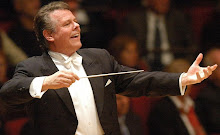
Conductor: Jascha HORENSTEIN
Orchestra/Ensemble: BBC Symphony Orchestra
, Bournemouth Symphony Orchestra, New Philharmonia Orchestra
Label: BBC Legends
Catalog #: BBCL 4191-2
Format: CD (2 Discs)
Time: 64:19, 74:00 min
SPARS Code: ADD
By Tony Duggan from www.musicweb-international.com:
The reputation of Jascha Horenstein has never been higher. In fact I believe his reputation has never been so high since his death in 1973. Why else would there be so many reissues of past commercial recordings and first time issues of radio archive recordings as there have been these past few years? Recording companies do not have money to burn so they would hardly issue so much material if they did not know there was a substantial number of collectors prepared to buy it.
Though by no means the only label reissuing Horenstein recordings, BBC Legends was always going to lead the way with his work since he was so highly regarded in Britain for so many years and was broadcast so often by the BBC. Interesting when you remember that Horenstein was not British, so giving the lie yet again to the oft-repeated urban myth that the British only like to back their own artists.
Horenstein was born in the Ukraine and grew up in Vienna and Germany and post-war he held American citizenship. Neither was he ever resident in Britain, as was wrongly alleged in a recent review. He was, for most of the last years of his life, actually resident in Switzerland. So why did the British like him so much? Obviously there was a simple and straightforward appreciation of a superb musician, but I have always suspected there was also an innate sympathy for a character who clearly didn’t seem to fit anywhere. Horenstein wore his peripatetic artistic existence with some unease. To quote what is an Irish expression, said of Horenstein by the former leader of the London Symphony Orchestra Hugh Maguire, you always had the feeling that Horenstein "had his feet in the wrong wellies". Well we British like people like that and are prepared to give them a chance when others might not. Not, of course, that this aspect would ever have saved Horenstein for longer than a couple of concerts had he been a second-rater. There is no more critical and discerning an audience in the world for classical music than the British and they would have sussed out a "wrong-’un" had Jascha Horenstein been one very quickly indeed. Horenstein was no second-rater. He was straight out of the top drawer, an inheritor of the great tradition. That is not to say that he got it right every time. He didn’t. No great artist ever does that. Be very suspicious of the Maestro Perfects of this world. They are often all style and no substance. Like all the greats, Horenstein had to dare to fail to succeed and he sometimes did simply fail. But the failures were more than outweighed by the successes which his growing recorded legacy testifies to. Not ever easy music-making, mark you. Horenstein was never an easy conductor to get to know. His was music making that was always challenging of the audience and the reaper of rewards only for those with more than half an ear to hear rather than just listen.
His appearances in Britain date from the mid 1950s and continued unbroken until the year of his death in 1973. He appeared all over the country, not just in London, and in the end was offered the job of succeeding Sir John Barbirolli at the Hallé Orchestra in 1970. A position he turned down because of failing health. But he was also highly regarded in France as the issue recently of recorded material from concerts in Paris spanning ten years has shown (Music and Arts CD-1146 covering 9 CDs). He also conducted regularly in the USA. In an interview in Gramophone magazine around 1970 Horenstein talked about his reputation in Britain being largely built on his conducting of Mahler and Bruckner. I think he regretted this as he conducted a very wide repertoire indeed. His last British engagement was actually Wagner’s Parsifal at Covent Garden. But it’s true he was known as a Mahler and Bruckner man for so many of my generation, each concert or broadcast by him in those two composers an event not to be missed.
When the post-war revival in the interest in Mahler’s music got underway only Holland could possibly claim prominence over Britain in being a more fertile ground for its appreciation and even that is proved a close-run thing by the public record. Conductors such as Horenstein, Goldschmidt, Barbirolli, Schwarz, Klemperer, Del Mar, Van Beinum, Steinberg (these last two fine Mahlerians followed each other as Principal Conductors of the London Philharmonic), Süsskind, Hurst, Boult and Groves (who in Liverpool in the mid-1960s gave the first complete one conductor/orchestra Mahler cycle since the 1920s) had led the way in laying down the foundations for the great Mahler renaissance in the 1960s. Their work and the work of critics such as Deryck Cooke, Donald Mitchell, Neville Cardus, William Mann and Michael Kennedy made Britain, all of Britain, a home for Mahler before many other countries could catch up in even their capital cities. People in Manchester, Liverpool, Bradford, Birmingham, as well as London, knew their Mahler and knew him well. Here’s an example. As early as 1960 the distinguished critic Ernest Bradbury was able to write: "In recent years, Leeds audiences have done well in the cause of Mahler and Bruckner and it is highly likely that the majority of listeners tonight are by now well acquainted with the general structure and particular Lokalton of a Mahler symphony." It is worth stressing that this is a city in the provinces of the north of England Bradbury was writing about, not London, and in 1960 at that. The reason for Bradbury’s confidence in the Mahlerian appreciation of a Yorkshire audience as early as 1960 was performances there by, among others, Jascha Horenstein. In fact so confident were the concert planners of Leeds in the Mahlerian senses of their audience as early as 1959 that Eduard Van Beinum and the Amsterdam Concertgebouw had been scheduled to give Mahler’s Seventh in the Town Hall that year, though Van Beinum’s death intervened three weeks before the concert took place. (They got Bruckner‘s Eighth under Jochum instead and finally heard the Mahler Seventh under Barbirolli in 1960. [the first live concert I attended - LM]) And there in the middle of the great Mahler movement in Britain from the late 1950s was Jascha Horenstein. He had helped Leeds people’s appreciation of Mahler with the London Symphony Orchestra in the Fifth Symphony there as early as 1958. (He recorded it for the BBC in 1960.) He gave the Eighth in London in 1959 in a landmark performance also available on BBC Legends (BBCL 4001-7). The Fifth again at the Edinburgh Festival in 1960 with the Berlin Philharmonic. The First, Fourth and the Fifth were given in London in 1960 for the centenary series of every work except the Eighth which had been played the previous year under Horenstein. The Third came in London in 1961 and he would later conduct the Ninth twice in the capital in 1966 (Music and Arts CD 235 and BBC Legends BBCL 4075-2). The Sixth would be heard under him in Bournemouth in 1969 (the subject of the present review) and back in London the Seventh later that year (BBC Legends BBCL4051-2 and Descant 02). There were other Mahler performances in Britain by Horenstein, of course, but it is the case that in just over a decade he had conducted every Mahler symphony in Britain except the Second. (He had already given that with the LSO in South Africa back in 1956.) Finally "Das Lied Von Der Erde" would be heard in Manchester in 1972 (BBC Legends BBCL 4042-2) so completing the Horenstein British Mahlerfest which we can now enjoy on CD largely thanks to BBC Legends. As a matter of interest, in that same period Horenstein also conducted all the Bruckner symphonies in Britain except for the Seventh. So you can see why his Mahler and Bruckner reputation was so high in Britain.
Horenstein also recorded the First and Third Symphonies of Mahler in the studio for Unicorn in 1969 and 1970 (UKCD2012 and UKCD2006/7). After his death the company also found a stereo recording of the Sixth Symphony at Swedish Radio with the Stockholm Philharmonic from 1966 (UKCD 2024/5, a concert on the same night that Bernstein conducted the Eighth in London with the Horenstein-trained LSO) and it later appeared on the Music and Arts label too (CDC 785). This Stockholm performance had much to recommend it but there was always, for me, the feeling of "stopgap" about it. It revealed enough to show that Horenstein saw the work as a strictly organized, classically rigorous drama that stressed its twentieth century foundations with a bleak, dogged, unforgiving outlook. The problem was the orchestra‘s playing. Whilst I think it is the case that the Stockholm Philharmonic gave their best for Horenstein, their best was just not good enough for his interpretation’s particular tenor. There is a corporate lack of concentration over the whole performance that renders Horenstein’s uncompromising vision of the work into mild anaemia and so causes what is a noble failure. To give what Horenstein clearly demands, as is borne out by the Bournemouth performance under review now, an unbending concentration across the whole immense work is needed and the Swedish orchestra is just not quite up to that. There were later plans for Horenstein to record the work in the studio in London with the LSO in 1973 but his death put paid to that. There it might have ended were it not for the fact that the BBC possessed this tape of him conducting the Bournemouth Symphony Orchestra in the work from 1969. When they re-broadcast it in the late 1980s in Radio 3’s "Mining The Archives" series Mahlerites who admired Horenstein knew that here was the real deal at last. The fact that it has taken some years between that broadcast and this release brings a case of "better late than never" and a feeling of gratitude that BBC Legends has now plugged the penultimate gap in the Horenstein Mahler discography at last. There is one final piece in the Horenstein British Mahler story to go and that is the Fifth, a work he conducted at least three times in Britain in concert. In the archive at the Barbican Centre in London there is an "off-air" copy of that studio recording that he made with the LSO at BBC Maida Vale Studios in 1960 (Shelfmark A00337, MP Ref: BCT 0344). Those who have heard it testify to its musical quality and the acceptability of the sound so can we hope that BBC Legends will look into the possibility of obtaining this for release next? Horenstein gave a great interpretation of the Fifth and it deserves to be heard.
The Bournemouth Symphony Orchestra of 1969 was a fine and versatile band, well-trained by their Principal Conductor Constantin Silvestri. So when Horenstein stepped on to the podium of the, now demolished, Winter Gardens in Bournemouth (an indoor concert hall in case anyone not familiar with British musical life is wondering) he had before him an ensemble who were more than capable of delivering exactly what he meant in this work and the difference over the Stockholm version is stunning. This now supersedes that earlier recording in every respect but one. You need to know that this new release is a mono recording where the Stockholm was in stereo. The BBC had not stretched to stereo recording in the English regions by early 1969 but this is excellent, well-balanced, firm and undistorted mono sound that will only displease the seriously audiophile listener and bothers me not one jot. What you will hear is all the details of this score in excellent, conductor’s balance perspective, the screaming upper line thrillingly revealed, the depths of low brass sound malevolently present and every point in between in sharp relief.
Horenstein was the ultimate nihilist conductor. No one could project bleak despair across the drama of a work like he could, as can be judged by his recorded performances of Mahler’s Ninth. So it is with the Sixth. What is so remarkable about this performance is Horenstein’s absolute determination to allow nothing in that detracts from the unswerving belief that this is a work about hope snuffed out. When you get to the very end, where the final statement of the cruel march rhythm first heard near the beginning and repeated throughout the work sends the hero to oblivion, you are aware this is what Horenstein was aiming at from the start, because he believes this is what Mahler was aiming for at the start too. In this way this is the most focused and distilled performances of this work I have ever heard and I doubt many conductors have the intellectual rigour matching great musicianship to both take this on board and deliver it so convincingly. Horenstein always had the ability to take in a work in its entirety and this is no better evinced as here. A brave thing to do, of course. Remember what I said about daring to fail to succeed. Take those passages where the mood seems to lift and there is light, lyricism and air to contrast all too briefly with the struggle, tragedy and mechanistic driving energy of this Kruppsinfonie. I am thinking of the "Alma Theme" second subject of the first movement, the pastoral cowbells and shimmering strings passages in the same movement recalled in the last, the brief celesta-accompanied tone painting towards the end of the first movement, the peculiar Trios of the Scherzo and the whole of the Andante. The overwhelming impression from the way he treats these passages is that Horenstein doesn’t want them to have too much of an effect on us. He holds them at arms length by seeming to push them along at all costs. It isn’t a case of his rushing these passages. There is a pressing-on, but not enough for you to be unaware of them. It is more that you are not going to be allowed to make any kind of emotional attachment to them. This way Horenstein seems to dangle them in front of us, to tell us we will never achieve the repose or comfort they promise, that our doom is already decreed by fate and so we may as well submit to it. It’s a remarkable aspect, moving and unnerving in its extraordinary honesty, and one he never forgets to mark when ever the need arises. This makes this performance so dark that you may only want to experience it on a few occasions.
More than any other Mahler symphony the Sixth is built rigorously around repeated use of particular rhythmic figures, thematic groups and chord clusters held together in a tight four movement symphonic form. The first movement is a strict sonata form but the last movement also has the most careful and easily discernable structural pillars. This is all gift to Horenstein’s familiar ability to forward-plan with modular tempo that make sure the architectonic plates that are the structure of the work never seem to shift. If ever his gift for picking a more or less single tempo for a whole movement was going to work it would be in this symphony. So it is that the first movement manages a thunderous, heavy and dogged march that still keeps grinding away in our mind as Alma’s second subject group sweeps in and out at around the same basic tempo, keeping that sense of creative detachment already mentioned. Likewise the coda to the first movement. There can be performances where the end of the movement seems to yell out a sense of triumph, albeit premature. Indeed this is often an aspect that is used to justify the placing of the Andante after the first movement rather than, as here, the Scherzo. Horenstein, by not playing for any triumph at all at this point, justifies triumphantly the edition of the work he is using: the 1963 Critical Edition by Erwin Ratz that bravely restored the inner movement order to Mahler’s original conception - Scherzo followed by Andante. After the kind of desperation coda Horenstein delivers, the assault of the Scherzo after the first movement sounds dramatically effective. The Scherzo itself is remarkable for some whip crack string playing that slices and slashes across the texture adding to a poisonous brew that not even the balm of the Andante will get rid of. The Andante itself is, as I suggested earlier, cool and clinical. It is also all of one minute faster than the Stockholm performance so Horenstein‘s aim seemed to be towards ever more classical framing. Rest for us the music certainly is, but it is an uneasy rest which is absolutely appropriate with what is to come. That is not to say that the simple presentation of the climax does not have the power to move. It moves because somehow Horenstein invests it again with the feeling that it is a transitory vision.
Earlier in this review I mentioned Horenstein daring to fail to succeed and the last movement illustrates this well. At over 33 minutes this is one of the longest versions you will hear. Horenstein and his players pull it off, but only just. The upside is that you can hear instrumental details and textures as though the score were laid out before you like a musical equivalent of a blueprint. The downside is that there are some passages where I would forgive anyone for thinking that the tension drops. The long passage between the two hammer blows, for example, could do with a bit more kick. But, as I also said before, Horenstein never made it easy for himself, or us, so a bit of perseverance is called for. The reward is a truly cathartic experience which is what this symphony should be in the end. The hammer blows are superbly placed, the chase to hoped-for triumph truly desperate, the crush of fate that much more terrible for being so grandly and spaciously stated, the great coda a fearsome dead zone all masked faces at a funeral as the mourners gaze into the grave.
The generous coupling in this set is Nielsen’s Fifth Symphony, a work Horenstein had the highest regard for, as can be heard in his short but revealing interview with Deryck Cooke included in this set. It comes from a BBC studio recording in 1971 and is in stereo. It has been released before on the short-lived BBC Radio Classics label but, for this new release, Tony Faulkner has performed a new remastering and comparison shows this to be a marked improvement. The sound is closer and much more immediate. Horenstein recorded the symphony for Unicorn in 1969 and that version was remarkable for the astounding side drum cadenza of Alfred Dukes in the first movement - a berserk assault with rim-shots cracking off the sticks like bullets. Mr. Dukes was not on duty for this BBC recording and David Johnson, though a fine player, doesn’t have the manic energy of his colleague and delivers a more conventional account of the great drum solo. Under Horenstein the first movement moves in two great arcs from the pregnant opening, through a dogged military march with side drum in perfect step, a life affirming lyrical middle section that scales to a wonderful horn-led climax and then across the battle between side drum and orchestra leaving a genuine desolation at the close where John McCaw’s eloquent clarinet solo stays in the memory for a long time. The second movement has all the energy you could want when needed, but Horenstein’s acute sense of the movement’s geography and his tempo choice allow him to take care to stress the reflective passages that are sometimes short-changed by others. The end brings real release and optimism and a shout of joy.
The coupling of these two symphonies is fascinating. They are separated by just 16 years but also by the Great War. Both have a first movement dominated by a militaristic march rhythm with side drum that both marches and growls. Both use the march as a weapon against us. But in the Mahler the conflict is won by the march and its allies who destroy the symphony‘s soul, whereas in the Nielsen the march and what it represent is finally beaten down by the forces of light. Nielsen ends his symphony with an emphatic yes. Mahler ends his with an emphatic no.
All that needs to be said about the final item on this set is that Horenstein more than has the measure of the mordant wit in Rossini’s Semiramide Overture and the 1957 mono recorded sound is spacious but clear. This item came from the British Library Sound Archive. I wonder what else of Horenstein’s they have.
This is a major release from BBC Legends containing a Horenstein Mahler Sixth to grace the discography of this work at last. You will be involved, you will be moved, you will be unnerved, you will not be disappointed.
Read more: http://www.musicweb-international.com/classrev/2006/Sept06/Mahler6_Horenstein_BBCL41912.htm#ixzz115UA72Kx