Composer(s):Antonin Dvorak
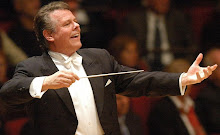
Conductor: Antal Dorati
Orchestra: London Symphony Orchestra
Label: Mercury Living Presence
Catalog #: 434 312-2
Format: CD
Time: 71:09 min
SPARS Code: ADD
Victor Carr Jr (Classics Today.com Reviewer)
This recording was one of the prize items in Philips' revamped Mercury Living Presence series. Antal Doráti's Dvorák Seventh and Eighth are among the most beautifully realized performances on disc, with exceptionally lively playing by the London Symphony. It's been said that these symphonies "play themselves", but Doráti imbues them with a vibrancy that makes the music sound ever-fresh while revealing much of the gorgeous inner detail of Dvorák's orchestral writing. The Seventh achieves an ideal balance of dark melancholy and forward propulsion, making for a strongly affecting reading, particularly in the finale. Doráti's Eighth revels in brisk tempos and bright, buoyant phrasing. The slashing rhythms and pointed articulation, especially in the outer movements, at times seems to anticipate early Stravinsky. The 1960s Mercury recordings offer astonishing presence, clarity, and impact; there's little sonic compromise here, save for some mushy timpani in the Seventh. These top-notch renditions belong in everyone's Dvorák collection, and thank goodness Arkivmusic.com is making sure they are still available. [1/24/2007]
Peter Bright (MusicWeb International Reviewer)
Thanks to ArkivMusic, these celebrated Mercury recordings have been made available once more. Although now more than forty years old, I can think of few more recent recordings which come close to matching the vibrancy and freshness captured by Dorati and the LSO. Of these, Kubelik (DG 457902-2), Jansons (EMI CDC7 54663-2) and Belohlavek (Chandos CHAN9391) offer the most compelling accounts. However, there is something unique in Dorati's reading that perfectly encapsulates the folk influence and lyrical charm that runs throughout Dvorák's work (particularly in No. 8).
For many aficionados, No. 7 is the greatest of all Dvorák's symphonies. It certainly contains some of his most emotionally expressive writing. However, my own preference is for Dvorák's more nationalist, folk-music influenced work, which is most clearly felt in No. 8. Nevertheless, there are some exquisite passages. The relatively long first movement is imbued with a sense of turbulence and tragedy, but Dorati carries it with a momentum that continuously holds the listener's attention. The Brahmsian Poco adagio is also beautifully paced, with some wonderfully clear clarinet and flute lines. Other conductors sometimes labour over this movement - for example, compare Harnoncourt's 1998 recording [Teldec 3984-21278-2] which clocks in at 9'37'' - but Dorati's relatively short timing (8'19'') never feels too brisk or rushed. Instead, the listener is pulled along by the warm and nostalgic performance.
The scherzo returns to quintessential Dvorák territory: elements of polka and furiant combining to produce a glorious, energetic and sparkling texture. Only in the trio section is there a certain faltering in the otherwise confident performance. The final movement is given a suitably muscular reading, with superb woodwind and brass sections.
If anything, No. 8 is even more impressive, full of Slavonic character and energy. A personal favourite, the first movement begins with an achingly beautiful melody. Open, expansive playing conjures a colourful palette of sunshine and storm, leading to the pastoral second movement.
The famous third movement (allegro grazioso) is perhaps the highlight of the entire disc, marked by buoyant, warm and receptive playing throughout. An absolute joy. The fanfares and dramatic flourishes that characterise the immensely exciting and varied final movement are also delightful. I can only imagine how happy the composer would be to hear such a sympathetic and involving rendering of some of his most magnificent creations.